
Mental Health Funding Fails Australian Teenagers
Mental Health Funding Fails Australian Teenagers
I've watched governments throw billions at mental health while our teenagers continue to struggle. The latest announcements - Labor's $1 billion and the Coalition's $400 million - sound impressive on paper. But I have one burning question: will this money actually reach the kids who need it most, or disappear into the same traditional mental health outlets that have consistently failed our youth?
After eight years building Australia's most effective youth development program, I can tell you with absolute certainty that money alone doesn't solve problems. Direction matters. Results matter.
The mainstream mental health system has left countless teenagers behind. I've seen it firsthand. Families come to us desperate, having cycled through counselors, medications, and programs that delivered plenty of promises but few results.
When Systems Fail Our Kids
During my military service in Afghanistan, I learned that theoretical approaches often collapse in the face of real-world challenges. Australia's mental health approach for teenagers suffers from the same disconnect between theory and practice.
Anxiety and depression rates among our youth continue to climb. Tech addiction has created a generation struggling to connect in the real world. And what's our solution? Throw more money at the same failing systems.
This isn't just my opinion.
The Queensland Youth Justice Reform Committee recognized the need for alternative approaches and identified our program as a standout success. Senator Jacqui Lambie has advocated for our methods on the Senate floor. When 7 Spotlight conducted their special investigation on tech addiction with Michael Asher, they discovered something remarkable – our program was the only one in the country demonstrating consistent success at scale.
What Actually Works
The difference between traditional mental health interventions and our approach is simple: we focus on structure, real-world connection, and measurable outcomes.
In 2021, we expanded from Queensland into NSW because of our success with 1000's of participants. The results spoke for themselves. We weren't just helping kids feel better temporarily – we were fundamentally changing their trajectory.
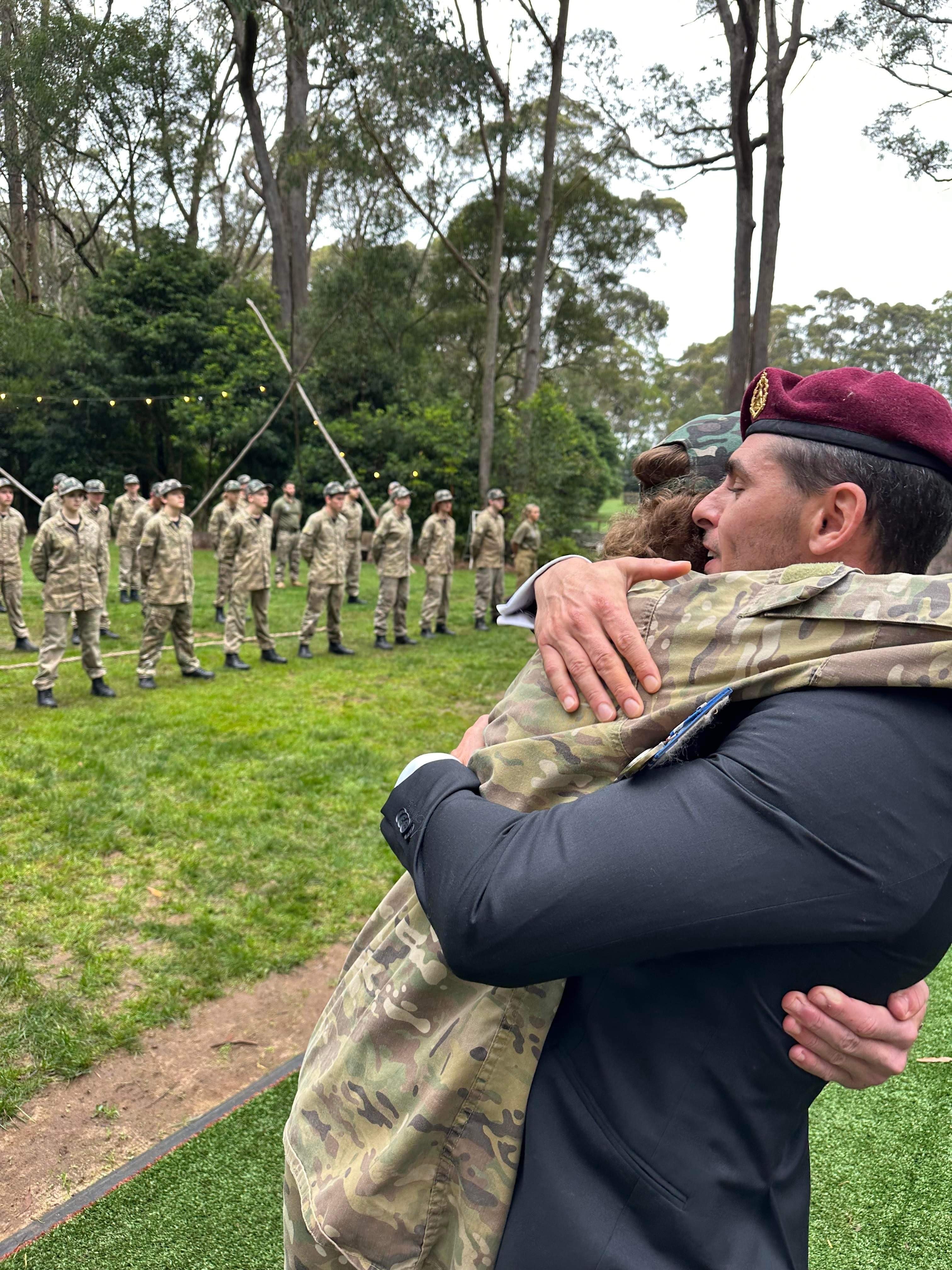
Military veterans bring a unique perspective to youth mentoring. We understand discipline, structure, and purpose. We've experienced extreme challenges and developed resilience. Most importantly, we recognize that talking about problems isn't enough – action creates change.
Tech addiction provides the perfect example. While traditional approaches might offer counseling about screen time, our program removes the devices and reintroduces teenagers to real-world challenges, connections, and achievements. The transformation is profound and lasting. The latest scientific study released in Queensland proves a direct connection between social media and poor diet. Well i have been pushing this on program and in the media for years. Why, becuase i was seeing it first hand.
The Billion Dollar Question
So here's my challenge to policymakers: before distributing another billion dollars, examine what actually works. Look at programs with measurable outcomes. Ask the hard questions about traditional mental health approaches that continue receiving funding despite minimal results.
The definition of insanity is doing the same thing repeatedly while expecting different results. Our mental health funding approach for teenagers has followed this pattern for too long.
Campsie RSL Group recognized our impact with a $200,000 sponsorship. Bunnings contributed $60,000 worth of boots. These organizations conducted their due diligence and invested in results. Shouldn't our government do the same?
When I recently delivered the keynote address with Senator Lambie at the Retail Crime Symposium in Melbourne, a parent approached me afterward. With tears in her eyes, she described how her son had cycled through five different psychologists and three medication changes with minimal improvement. After two weeks in our program, he was reconnecting with family, pursuing interests, and developing confidence.
That's what success looks like. Not funding announcements. Not theoretical frameworks. Real change in real lives.
Breaking The Cycle
Our education system fails many students. Our mental health system loses vulnerable teenagers. Our youth justice system deals with the consequences. This cycle continues because we keep investing in approaches that sound good in committee meetings but fail in practice.
My mission – is to create lasting change for teenagers and families nationwide. We focus on those who have fallen through the cracks of mainstream systems. The kids others have given up on.
Our military background isn't just a biographical detail – it's fundamental to our approach. We understand that character develops through challenge. That resilience builds through structured adversity. That connection happens when screens disappear and real conversations begin.
Parents often tell me, "My teenager would never agree to your program." Two weeks later, those same teenagers don't want to leave. Why? Because beneath the resistance, they crave structure, purpose, and genuine connection.
The Path Forward
If we're serious about addressing youth mental health in Australia, we need to radically rethink our approach. The current billion-dollar funding announcement could transform a generation – or it could disappear into administrative overhead and ineffective programs.
My challenge to government officials is simple: Lets Talk. See the transformation firsthand. Talk to the teenagers whose lives have changed. Then ask yourself if the traditional mental health outlets deserve another billion dollars without proving their effectiveness.
Australia's teenagers deserve better than political talking points and recycled approaches. They deserve solutions that work. As a nation, we can't afford – financially or morally – to continue funding failure.
Mental health policy isn't about who makes the biggest funding announcement. It's about who delivers real results for our most vulnerable young people.
The question isn't whether we should spend money on youth mental health – we absolutely should. The question is whether we'll have the courage to direct that money toward approaches that actually work, even when they challenge conventional thinking.
Our teenagers are waiting for the answer.