NSW's Hate Speech Ban Misses the Real Crisis Unfolding in Our Schools
NSW's Hate Speech Ban Misses the Real Crisis Unfolding in Our Schools
The New South Wales government imposed an explicit hate speech ban across 3,000+ schools. Premier Chris Minns says schools should be places where young people feel "safe, respected and supported, not exposed to hate or extremism."
I agree with the intent.
After spending eight years on the frontline with over 3,500 troubled teenagers and their families, I'll tell you this policy addresses a symptom whilst ignoring the disease spreading through our education system.
The real story is what happens before a child encounters hate speech in a classroom.
The Data They're Not Discussing
Whilst policymakers focus on banning words, the AFP investigated 37 individuals aged 17 or younger for extremist activity between January 2020 and December 2024. The youngest? 12 years old.
ASIO revealed that about 20% of its priority counterterrorism cases now involve minors.
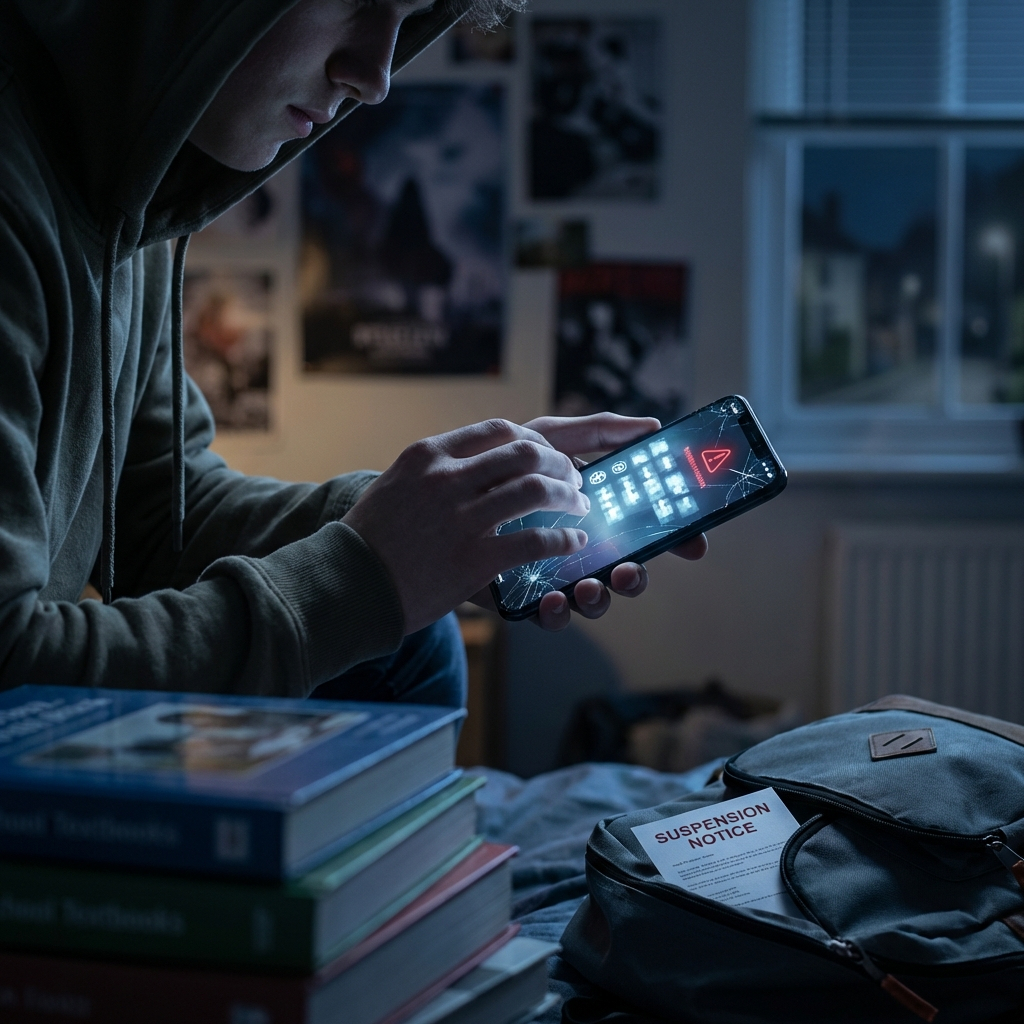
These aren't children being radicalised by teachers spouting hate speech in classrooms. These are kids who've fallen through every crack in our system, spending 4 to 12 hours daily on platforms like Discord, Telegram and TikTok, consuming the same extremist propaganda videos investigators find across multiple unrelated cases.
I've seen this pattern hundreds of times. Tech addiction. School suspensions. Destroyed self-esteem. Failed interventions. Then the real danger begins.
The Critical Moment We Keep Missing
The research shows one in 25 children receives at least one suspension during their 3rd through 6th grades in NSW government primary schools, most often for aggressive behaviour, continued disobedience or physical violence.
The first suspension is the warning light flashing on the dashboard.
Instead of intervening with real support, we follow a predictable cascade: suspension leads to counselling referral, which leads to psychiatrist, which leads to medication, which leads to worse outcomes. I've watched this pattern destroy families for nearly a decade.
The Victorian Ombudsman's enquiry found that 60% of those in the youth justice system had previously been suspended or expelled from school, and over 90% of adults in our prisons didn't complete secondary school.
The hate speech ban does nothing to address this.
What's Radicalising Our Youth
Radicalisation doesn't start with a teacher's inflammatory comment. It starts with a child who's been failed by every system designed to help them.
The AFP notes shared factors across youth radicalisation cases frequently include neurodiverse or mental health diagnoses, growing up in disruptive or harmful environments, and facing ongoing social challenges throughout school.
These patterns look familiar.
These are the same children I've worked with for eight years. The ones seeing doctors, clinical psychologists, psychiatrists and counsellors for years. The ones on multiple types of medication. The ones whose parents are broken down, isolated, screaming for help with no effective guidance.
I've worked with children who were being radicalised, sent to my program by federal authorities. This gives me a clear understanding of how radicalisation unfolds, not from a theoretical perspective, but from spending days with these young people, understanding their patterns, their vulnerabilities, and the precise mechanisms extremist groups exploit.
After years of mainstream mental health support, the situation got worse. Not better. Far worse.
Then they find community online. The wrong kind of community.
The Tech Addiction Gateway
In 2018, I started identifying patterns mainstream experts refused to acknowledge. Tech addiction wasn't present. It was epidemic.
By the time 7 Spotlight did their major investigation on tech addiction, naming me as the only expert in Australia dealing with this crisis at scale, the damage was done to thousands of children.
Tech addiction increased 32% in five years amongst youth. It prevents the development of relationship skills. It correlates with mental health disorders, destroyed self-esteem and school dropout. It creates perfect conditions for extremist groups to prey on vulnerable children.
Extremist groups are targeting children as young as 10 to 13 years old, using the same grooming tactics as child sexual predators. The radicalisation process is a social process involving an adult preying on a minor.
A hate speech ban in schools does nothing to address the 4 to 12 hours daily these children spend in online spaces where no teacher conduct rules apply.
The Policy Response That Misses the Point
Premier Minns emphasises the changes preserve legitimate classroom discussion, including on Israel-Palestine and religious texts. The Education Standards Authority will update registration rules in early Term 1, 2026, giving regulators clearer powers to act, including potential dismissal for breaches.
Teachers shouldn't be spreading hate speech. I don't disagree.
This policy operates on the assumption the primary threat to students comes from staff conduct rather than from the systemic failures pushing vulnerable children toward extremism in the first place.
After testifying at the Youth Justice Reform Select Committee in Queensland, after giving the keynote address at the Retail Crime Symposium 2024 in front of the Victorian Premier and Police Commissioner, after working with Senator Lambie to push for the social media age restrictions being implemented now, I'll tell you what policymakers keep missing.
Punishment alone doesn't work. Young people need trauma-informed care and long-term support. Youth radicalisation is growing and becoming more complex because we're intervening at the wrong point in the wrong way.
What Early Intervention Actually Looks Like
Half of all mental disorders start by 14 years and are preceded by non-specific psychosocial disturbances. 75% of mental illnesses emerge before the age of 25 years.
Young people aged between 12 and 25 years have had by far the worst levels of access to mental health care across the whole lifespan, with health services poorly designed, grossly under-resourced and unfriendly to, and untrusted by, young people.
This is why I stepped away from Veteran Mentors after eight years to launch The Youth Regiment with a focus on early intervention through the education system.
Real intervention means catching children after their first suspension, not their seventh. It means addressing tech addiction before it destroys their capacity for human connection. It means working with families who are isolated and lost, not medicating their children and hoping for the best.
It means entering schools and providing support on things not taught: mental resilience, healthy relationships with technology, physical training and routine that breaks generational cycles.
The Youth Regiment works with educators to identify at-risk children early, implements strategies based on frontline experience rather than theoretical frameworks failing for decades, and provides post-program educational support continuing the work long after the initial intervention.
The Truth
The NSW hate speech ban is a political response to a legitimate concern following the Bondi terror attack and rising antisemitism. I understand the pressure to be seen doing something.
It's the wrong something.
Whilst we're focused on what teachers say in classrooms, children are being radicalised in their bedrooms. Whilst we're updating conduct codes, families are screaming for help. Whilst we're empowering regulators to dismiss staff for breaches, we're ignoring the 60% of youth justice system participants who were previously suspended from school.
The shift in school culture leaders need to focus on isn't about hate speech bans. It's about recognising schools are the first line of defence in preventing youth radicalisation, and defence requires early intervention, not reactive policies.
One in five children with substantiated child protection reports and one in four children in out-of-home care are suspended from school. These are the children most vulnerable to radicalisation. These are the children a hate speech ban does nothing to protect.
What Needs to Happen Now
If the NSW government is serious about protecting students from extremism, they need to shift focus from staff conduct to student support.
Fund early intervention programs. Partner with organisations having proven results at scale. Acknowledge mainstream mental health approaches have failed these children and try something different.
I've worked with Senator Lambie on media engagement and policy recommendations. We pushed for social media age restrictions when experts said it was impossible. The Prime Minister is implementing those restrictions later this year.
We can do the same with early intervention in schools.
The government has promised $1 billion in mental health investment if re-elected. One percent of the funding spent on proven early intervention approaches would generate more success than the other 99% spent on systems demonstrating failure.
This requires admitting banning hate speech, whilst symbolically important, does nothing to address the pipeline pushing vulnerable children toward extremism.
It requires recognising the real crisis isn't what's being said in classrooms. It's what's not being done when warning signs show up.
After eight years and 3,500+ families, I'll tell you what those warning signs look like. I'll tell you what happens when we ignore them. I'll tell you what works when we intervene early.
The question is whether policymakers are ready to listen to frontline experience or whether they'll keep implementing policies making headlines but missing the point.
Our children deserve better than symbolic gestures. They deserve intervention that works.