The Paratrooper's Guide to Parental Resilience: What Afghanistan Taught Me About Raising Kids in Crisis
The Paratrooper's Guide to Parental Resilience: What Afghanistan Taught Me About Raising Kids in Crisis
I've been surrounded before. Cut off, alone, facing an unknown enemy with nothing but training and willpower between survival and collapse.
That was Afghanistan, 2012.
Now I see the same look in parents' eyes. The thousand-yard stare of someone who's fought every battle, followed every order from the system, and still watches their child slip further away.
After eight years working with over 3,500 families across Australia, after my own war with PTSD, anxiety, depression, a broken neck and back, after being told by psychiatrists I'd never work again, I'll tell you this:
Resilience isn't what you think it is.
The data backs up what I see on the ground. 41% of parents report being so stressed most days they don't function. But statistics don't capture the reality of a mother breaking down in my office, or a father who hasn't slept properly in three years.
Here's what eight years on the frontline and a decade of personal hell taught me: resilience isn't about being unbreakable. It's about knowing how to reassemble after you've shattered.
The Lie That Nearly Killed Me (And Is Killing You)
When I came back from Afghanistan in 2012, diagnosed with PTSD, anxiety, and depression, the system told me the same thing it's telling you now:
Follow the protocols. Take the medication. See the specialists. Trust the process.
So I did. Every psychiatric appointment. Every counsellor. Every medication they prescribed. I spent hundreds of hours in allied health programs, took every mental health drug and painkiller imaginable.
Then I broke my neck and back in a surfing accident. Four months unable to move. The medication pile grew higher. The psychiatrist told me I'd never work again, never lift weights, never jump from planes.
And I believed them. I believed I was broken beyond repair.
Here's what saved me: I stopped following their script and started writing my own.
I'm not special. I'm not tougher than you. But I recognised the same pattern I now see destroying families. The system treats symptoms whilst ignoring the foundation.
You've been seeing doctors and psychologists for years. Your child's been on multiple medications. You've followed every recommendation. And things got worse.
The problem isn't you. The problem is the approach was never designed for people like us.
What I Learned Surrounded and Cut Off
In Afghanistan, when you're completely surrounded with no support coming, you learn something crucial: panic is a choice.
Your body wants to freeze or flee. Your mind screams you're finished. But between the stimulus and your response is a space. A fraction of a second where you choose.
That's what I teach teenagers in ice bath meditation. That's what parents need to understand about raising kids in crisis.
You don't protect your child from discomfort. You teach them to face it with tools and guidance.
Protection without preparation creates fragile adults. I've seen it thousands of times.
The mother who shields her son from every difficulty isn't showing love. She's showing fear. And children inherit fear like they inherit eye colour.
The Battlefield Bond: Why Vulnerability Trumps Authority
On the 29th of August 2012, I lost three mates in a green-on-blue attack in Afghanistan. When I finally discharged in 2015, I carried the memory and the shame of survival.
For years, I tried to be the strong one. The mentor who had all the answers. The leader who never showed weakness.
It nearly destroyed me.
Everything changed when I stopped hiding my scars and started showing them. When I told teenagers about my own battles with PTSD, my broken body, the medications, the dark nights when I wasn't sure I'd make it.
Vulnerability precedes trust. I learned this in 3 RAR, amongst paratroopers who'd spilt blood together. When you train knowing you could be dropped into unforgiving terrain at any moment, you learn fast: the strongest bonds are forged in shared suffering.
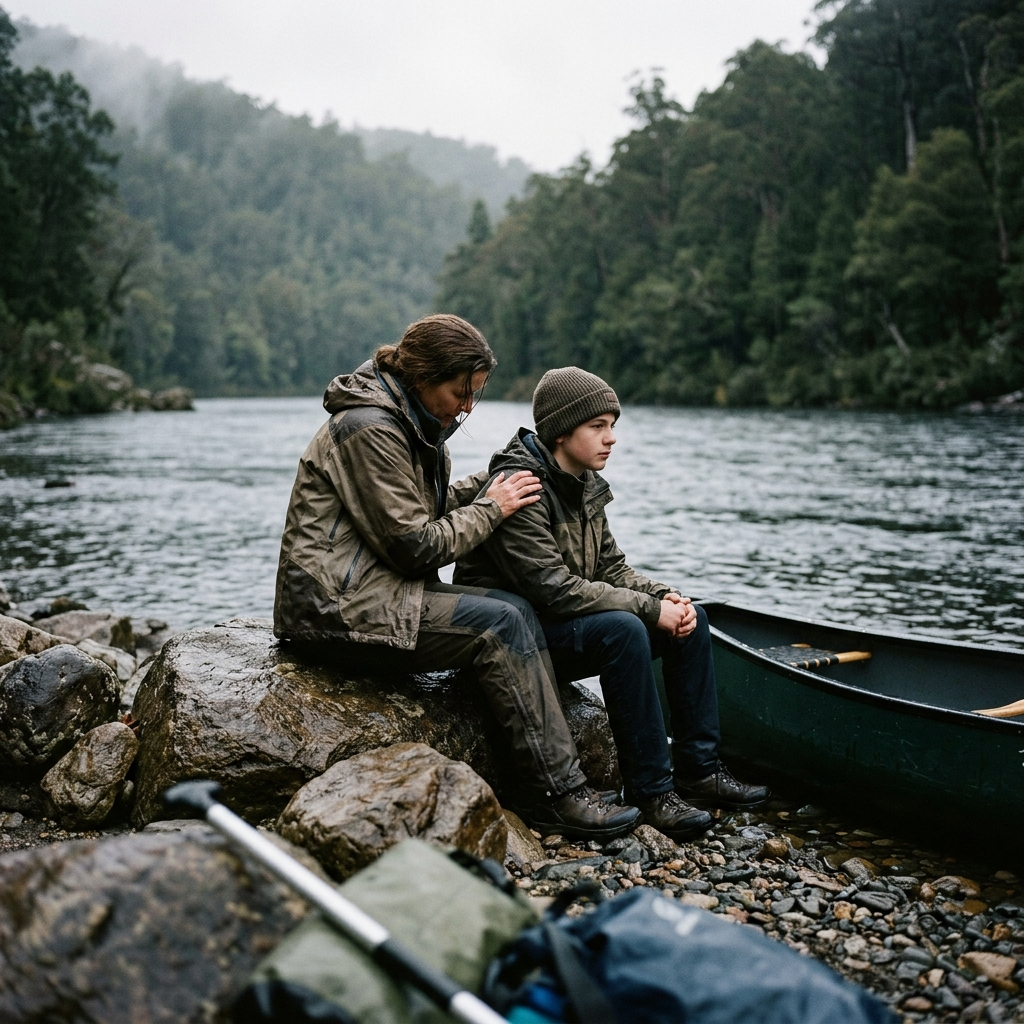
On our Reconnection Expedition, I take parents and children into remote wilderness. No phones, no distractions. Three days of canoeing and camping. The breakthrough happens when parents stop lecturing and start confessing.
I've watched mothers who couldn't sleep the night before, terrified their child would reject them. When they chose vulnerability first, when they shared their own failures, fears, and breaking points, I watched teenagers soften in real time.
Community dissolves shame. Isolation amplifies it.
The Three Pillars I Built Myself Back With
1. Self-Compassion Over Self-Destruction
After my neck and back broke, I lay there for four months. Unable to train, unable to be the paratrooper I'd defined myself as. The self-criticism was relentless. You're weak. You're broken. You're done.
The psychiatrist agreed. "You'll never work again," he said. "Accept it."
Here's what I learned the hard way: self-compassion isn't weakness. It's the foundation of every comeback.
Australian research proves what I learnt in my darkest moments: parents who prioritise self-care have better mental health, feel more confident, and enjoy parenting more.
When you're kind to yourself during setbacks, you model the behaviour you want your child to develop. When you acknowledge your struggles without shame, you give them permission to do the same.
You don't pour from an empty cup. And you don't teach resilience if you're destroying yourself in the process.
2. Shared Suffering Creates Unbreakable Bonds
Why do I only employ veterans and first responders as mentors? Because they understand something civilians don't: the deepest connections are forged in shared difficulty.
When you've trained knowing you could be dropped into hostile territory together, when you've looked across at your mate in the plane and understood without words you'll face whatever comes next side by side, bonds form you don't break.
I teach teenagers mental control through ice bath meditation. It's brutal. It's confronting. And parents who succeed don't watch from the sidelines. They get in the ice with their child.
You're not the authority figure lecturing about resilience. You're the teammate demonstrating it.
This is the difference between telling your child to be strong and showing them what strength looks like when you're struggling too.
3. Discipline With Love (The Military Secret)
People misunderstand military discipline. They think it's about being harsh, cold, authoritarian. But discipline isn't dictatorship.
Real discipline in 3 RAR came wrapped in fierce loyalty. Your sergeant would push you harder than you thought possible, but you knew without question they'd die for you if it came to it. Standards were non-negotiable, but support was unconditional.
Research across all backgrounds shows the same pattern: when parents are warm and supportive whilst holding consistent, firm expectations, adolescents are less likely to suffer anxiety, depression, or substance abuse.
You love your child fiercely and still maintain boundaries. You're their safe place and still hold them accountable. These aren't contradictions. They're requirements for raising resilient humans.
The Battle-Tested Framework
Here's what works, distilled from thousands of hours with families in crisis and my own decade-long war with broken mental health and a broken body:
Listen more than you speak. In combat, you learn fast: the person talking isn't the person reading the situation. When your child opens up, resist every urge to solve, lecture, or reassure. Listen. The connection happens in the silence.
Ask rather than command. "What do you think you should do?" builds their capacity. "Here's what you need to do" builds their dependence. I learned this leading men. You order compliance, but you earn commitment.
Stay accessible after hard moments. The real work happens in the days after crisis. Don't disappear when things calm down. They need you most then.
Model the behaviour, don't preach it. If you want your child to handle stress well, let them see you handling stress well. If you want them to be vulnerable, be vulnerable first. I show teenagers my scars. Physical and mental. Walls come down.
Build through difficulty. Stop removing obstacles. Start teaching them how to face obstacles with tools and guidance. Protection without preparation creates fragile adults.
The Day I Learnt I'd Never Jump Again
Four months lying flat on my back. Unable to move. Unable to be the person I'd spent my adult life becoming.
The surfing accident broke my neck and back. The medication kept me numb. The psychiatrist's words kept replaying: "You'll never work again. Never lift weights. Never jump from planes."
I was a paratrooper. Jumping from planes wasn't just what I did. It was who I was.
Before Afghanistan, before the diagnosis, before the broken body, I'd survived poverty and domestic violence as a kid. Watched it daily. Lived in it. Then I overcame drug dependence and lost my step-father to cancer before I enlisted at 25.
The military gave me structure. Purpose. The paratroopers gave me brothers. Afghanistan gave me PTSD, anxiety, depression, and the memory of three mates who didn't come home.
And now this. Broken spine. Mountains of medication. A future I didn't recognise.
The system told me to accept it. Adjust my expectations. Grieve the life I'd lost and settle for whatever was left.
I see parents doing this now. Accepting the prognosis. Adjusting their dreams. Grieving the child they thought they'd have instead of fighting for the one they do.
I refused to accept it. Not because I'm heroic. Because I'd already survived too much to quit in a hospital bed.
Recovery wasn't linear. Some days I'd make progress. Others I'd slide back. The pain was constant. The doubt was worse.
But I had one advantage the system didn't account for: I knew how to suffer with purpose.
In the military, suffering isn't pointless. Every brutal training session, every impossible march, every moment of wanting to quit serves a purpose. You're building capacity. Forging resilience. Preparing for what's coming.
So I treated my recovery the same way. Every small movement was a victory. Every reduction in medication was progress. Every day I chose to fight instead of accept was training for the life I was rebuilding.
Parents need to understand this. Your child's struggle isn't pointless suffering. It's the forge where their character gets built. Your job isn't to remove the heat. It's to stand beside them whilst they're in it.
Two years after being told I'd never work again, I cofounded Veteran Mentors. Started building the program parents across Australia would come to trust with their most troubled teenagers.
The psychiatrist was wrong. The system was wrong. And the parents who accept defeat for their children are wrong too.
When the System Fails You (It Failed Me Too)
I spent hundreds of hours with counsellors, doctors, and specialists. I took every medication they prescribed. I followed every protocol.
And I got worse.
The mainstream mental health system works for some people. But if you've been in it for years and nothing's changed, if your child's on multiple medications with no improvement, if they've been suspended seven or eight times, if you're at breaking point, you need a different approach.
Early intervention is everything. It's never too late.
I was told I'd never work again. Never train again. Never be the person I was before Afghanistan and the broken body that followed.
They were wrong.
I've worked with families who thought they'd lost their child forever. Parents contemplating giving up custody because they couldn't keep anyone safe. Teenagers written off by every system.
The transformation happens when parents stop trying to fix their child and start building alongside them.
The Community That Saved My Life
You cannot do this alone. I tried. Nearly killed me.
When I cofounded Veteran Mentors in 2016 with Glenn, Troy, and Ricky, my mates who understood what I'd been through, something shifted. Not because they had answers. Because they had experience.
We'd served together in 3 RAR. When the call went out to build something from nothing, my paratroopers answered without hesitation. Because you do this for people you've bled beside.
Research shows quality relationships enable families to cope with stressors and maintain functioning amidst adversity. Here's what research doesn't capture: shared vulnerability heals communities faster than individual therapy ever could.
When parents on our programs share their struggles, when they admit they're not coping, they're not perfect, they're barely holding on, the shame dissolves. They realise they're not failing. They're facing challenges every parent faces, no matter their education, income, or background.
Find your community. Whether it's other parents facing similar battles, a support group, or a program like ours. Find people who understand.
Because isolation nearly killed one mother I worked with. But community saved her. Just like my mates from 3 RAR saved me.
The Long War
Parental resilience isn't built in a single battle or a weekend breakthrough. It's built in the daily choice to show up, to be present, to stay connected when you're surrounded and cut off from support.
It's built when you choose vulnerability over strength.
When you model self-compassion instead of self-destruction.
When you face difficulty alongside your child instead of trying to remove it.
When you hold boundaries with fierce love, not control with anger.
After Afghanistan, after PTSD, after a broken neck and back, after being told I was finished, I'm still here. Not because I'm unbreakable. Because I learned how to reassemble after shattering.
After eight years and 3,500 families, you're stronger than the system told you. Your child is more capable than they've been allowed to believe. The connection you're searching for is possible.
But it starts with you being present. With you being honest.
This is the paratrooper's guide to resilience. What I learned surrounded and cut off, facing the impossible with nothing but will and my mates beside me.
This is what I'm teaching your family.