
We Banned Porn But Advertise OnlyFans to Children
We Banned Porn But Advertise OnlyFans to Children
I applaud the new under-18 porn restrictions.
But we're lying to ourselves.
We banned explicit content with one hand whilst plastering OnlyFans billboards across our cities with the other. We're teaching children that selling your body is an acceptable career path whilst simultaneously protecting them from seeing explicit material.
The hypocrisy is destroying our youth.
The Billboard on the School Route
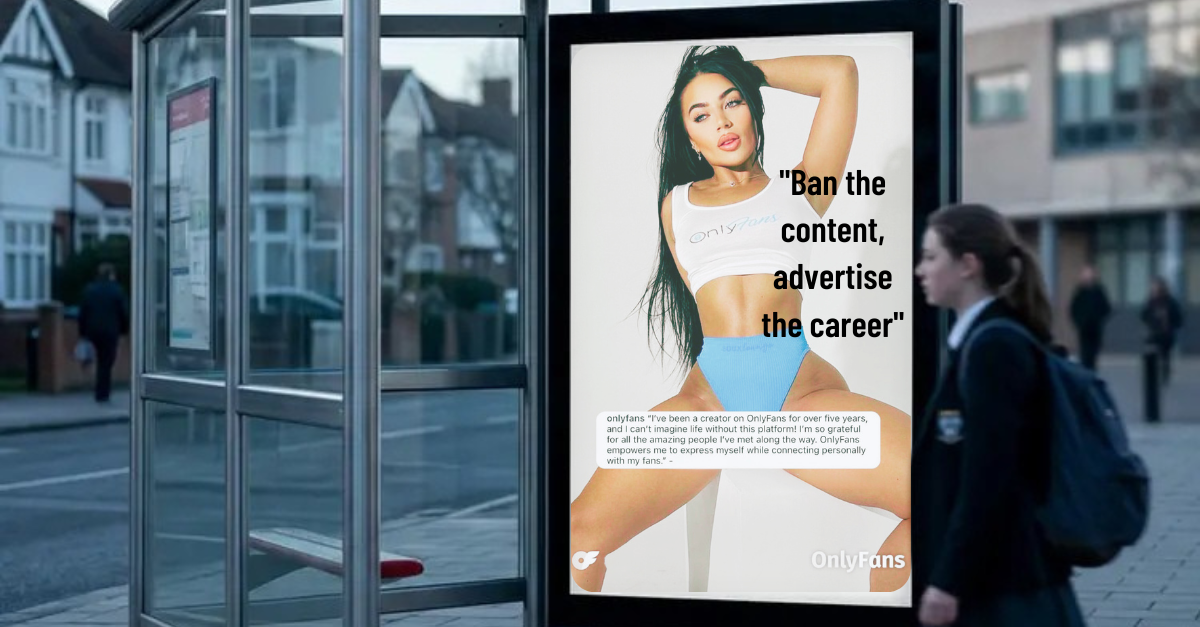
A parent told me her 13-year-old daughter walks past an OnlyFans advertisement every morning on her way to school. The billboard shows a young woman in lingerie with text promoting "financial freedom" and "be your own boss."
You see the problem.
We're protecting children from pornography online whilst advertising platforms that normalise body commodification on their daily commute. We've created a system where explicit content is banned but the pathway to creating it is celebrated as entrepreneurship.
According to research, 17.7% of Australian young people aged 16-24 experienced online sexual solicitation by an adult before age 18. More than one in 10 Australian adolescents have experienced sexual extortion in their lifetime, with more than half experiencing it before age 16.
The data shows what I witness on program every single day.
What 3,500 Families Taught Me
When children arrive at our programs, they have no self-esteem left. The pattern is consistent across every corner of Australia.
Tech addiction reaches 4-12 hours daily. Social media correlates directly with destroyed self-esteem, mental health disorders, and family breakdown. Parents feel isolated and lost, questioning their parenting whilst believing the false promise that social media keeps their children "connected."
But here's what most people miss.
The sexualisation isn't just happening through explicit content. It's happening through the normalisation of body commodification as a legitimate profession. When influencers with millions of followers promote OnlyFans as "empowerment," when billboards advertise it as "financial freedom," when society celebrates it as entrepreneurship, we're teaching children that their bodies are products to be sold.
Research published in Paediatrics shows social media use relates directly to sexual problematic behaviours such as early sexual activity, exposure to pornography, and sexting. The American Psychological Association found extensive evidence of a significant association between sexualisation and prevalent mental health challenges among girls, including eating disorders, low self-esteem, and depression.
I've spent over 150 contact hours with most families. I've watched this pattern destroy thousands of children.
The Empowerment Lie
The most dangerous part isn't the explicit content. It's the disguise.
OnlyFans and similar platforms market themselves as empowerment. Financial independence. Taking control of your body. Being your own boss. The language is deliberately designed to appeal to young people seeking autonomy and purpose.
But empowerment doesn't mean commodifying your body for strangers. Independence doesn't mean selling intimate images for validation. Taking control doesn't mean giving thousands of anonymous people access to your most private moments.
When 8-9 year old girls who played an appearance-focused internet game for just 10 minutes demonstrated heightened body dissatisfaction according to research, we should understand how rapidly digital exposure damages self-image.
And now streaming platforms are producing documentaries celebrating figures like Bonny Blue—an OnlyFans creator who's made headlines for explicitly targeting barely-legal teenagers and gangbangs. We're not just normalising this industry; we're elevating it to entertainment. We're packaging exploitation as success stories, giving these figures documentary treatments that present their work as aspirational. Children aren't just seeing billboards anymore—they're watching hour-long productions that glamorise the commodification of bodies, complete with narrative arcs about "empowerment" and "breaking free." The message couldn't be clearer: society celebrates this path whilst simultaneously claiming to protect young people from sexual content.
You think sex education being taught in schools grabs the attention of a teenager who looks at an influencer like Bonny Blue? Hell no. Schools are teaching anatomy and consent in clinical terms whilst teenagers are watching glamorous documentaries about people making millions from commodifying their bodies. The disconnect is staggering. We're competing with slick production values, aspirational lifestyles, and the illusion of instant wealth and fame—and we're losing because we refuse to acknowledge what we're actually up against.
The children I work with arrive with destroyed self-esteem. They've been suspended multiple times, seen countless counsellors, tried various medications. Their parents are broken, having screamed for help for years with no effective guidance.
And throughout this entire spiral, they've been exposed to messaging that tells them their worth is tied to their physical appearance and sexual attractiveness.
The System That Fails Them
Here's the pattern I've documented across 3,500 families:
First suspension happens. No intervention. Child withdraws further into tech addiction. Parents seek help. Mental health system prescribes medication. Situation worsens. More suspensions. More medication. Deeper spiral. Family breakdown.
By the time families reach our program, they're desperate. Years of mainstream mental health support made the situation worse. The education system suspended without providing tools. Allied health methods combined with medication provided temporary relief then deeper spiral.
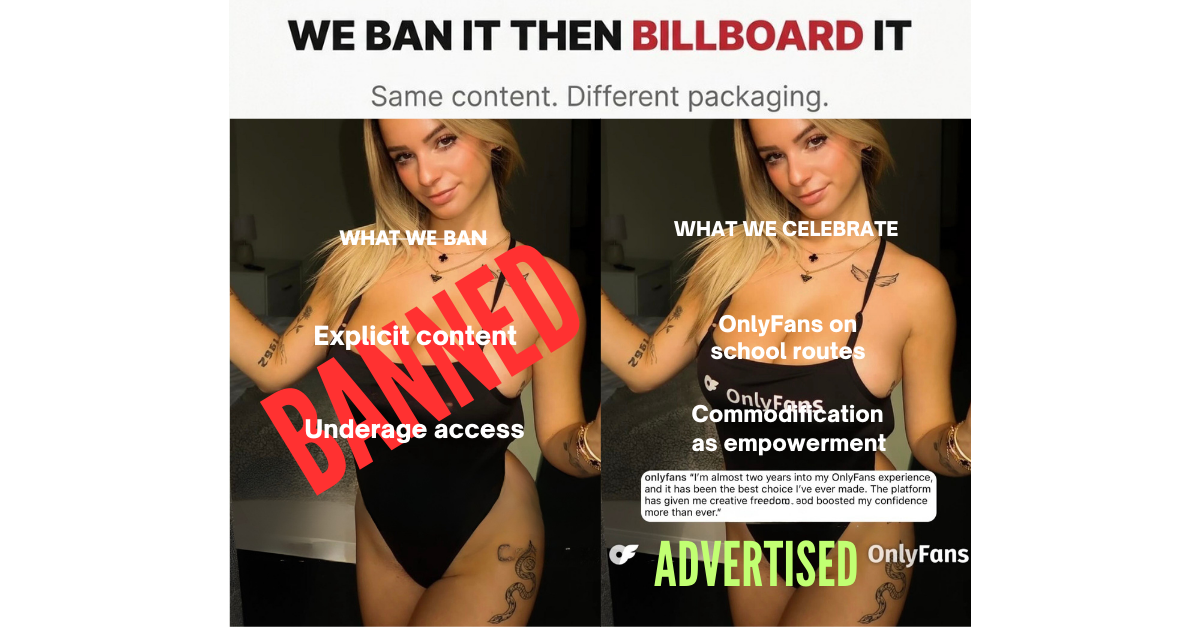
Meanwhile, society sends contradictory messages. Protect children from explicit content but celebrate platforms that normalise exploitation. Ban pornography but advertise body commodification. Restrict access to harmful material but promote the creation of it as a career path.
Parents feel powerless. They lack awareness of the dangers. They fear confrontation. They believe the false promises about connection and empowerment.
The Missing Piece
The porn ban is necessary. But it's fundamentally insufficient without addressing the broader commodification culture.
We need comprehensive early intervention that addresses:
Education system reform. First suspension should trigger immediate intervention, not punishment. NSW schools suspend 800-1000 children weekly. Each suspension without intervention pushes children deeper into tech addiction and destroyed self-esteem.
Advertising standards overhaul. Platforms that normalise body commodification shouldn't be advertised where children can see them. We protect children from cigarette and alcohol advertising. We should protect them from exploitation advertising.
Digital literacy programs. Children need to understand the difference between profession and exploitation, between empowerment and commodification, between financial independence and selling intimate access to strangers.
Mental health system transformation. Stop medicating symptoms whilst ignoring the societal messages destroying self-worth. Address tech addiction, social media influence, and body image issues before they spiral into mental health disorders.
Parental support and education. Parents need tools to recognise early warning signs, have difficult conversations, and provide genuine alternatives to the false promises of social media and commodification platforms.
The Evidence Is Clear
According to the Australian Institute of Criminology, more than one in 10 Australian adolescents have experienced sexual extortion, with two in five extorted using digitally manipulated material.
The latest Australian Child Maltreatment Study found 1 in 13 children under 18 have faced unauthorised sharing of sexual images of themselves.
Research shows 95% of 13- to 15-year-olds used social media in 2024, with the most popular services being YouTube, Snapchat, TikTok, and Instagram. According to parents, 1 in 3 children are first exposed to social media at 5 or younger, and younger social media exposure correlates with more sexual harm online.
I've worked with Senator Lambie to push policy changes. We helped get the Prime Minister to implement age restrictions on social media from 16 and up. But that's just the beginning.
We need comprehensive change across education, mental health, advertising standards, and social media regulation.
The Window Is Closing
After eight years on the frontlines, I can tell you with certainty: selective morality will destroy another generation.
We can't ban pornography whilst celebrating platforms that teach children to create it. We can't protect them from explicit content whilst advertising body commodification as empowerment. We can't restrict access to harmful material whilst promoting the pathway to producing it as a legitimate career.
The children I work with have been failed by every system. Education suspended them without intervention. Mental health medicated them without addressing root causes. Society sent contradictory messages about their worth and their bodies.
By the time they reach our program, years of damage have been done. Multiple suspensions. Various medications. Destroyed self-esteem. Family breakdown. Parents who feel isolated, lost, and powerless.
Early intervention is critical. First suspension should trigger comprehensive support, not punishment. Tech addiction should be addressed before it reaches 4-12 hours daily. Self-esteem should be built before it's completely destroyed.
But we also need to address the broader culture that normalises exploitation as empowerment, commodification as independence, and selling intimate access as financial freedom.
What Needs to Happen Now
The porn ban is a necessary first step. But without comprehensive change, it's just selective morality that ignores the complete picture.
We need immediate action on advertising standards. Platforms that normalise body commodification shouldn't be advertised where children can see them. The same protections we provide from cigarette and alcohol advertising should extend to exploitation platforms.
We need education system overhaul. First suspension should trigger intervention, not punishment. Children need digital literacy programs that teach the difference between profession and exploitation.
We need mental health system transformation. Stop medicating symptoms whilst ignoring societal messages. Address tech addiction, social media influence, and body image issues before they spiral.
We need parental support. Give parents tools to recognise warning signs, have difficult conversations, and provide genuine alternatives to false promises.
Most importantly, we need to stop sending contradictory messages. We can't protect children with one hand whilst teaching them to commodify themselves with the other.
The evidence is clear. The damage is documented. The solution requires comprehensive change, not selective morality.
After working with 3,500 families, I've seen what happens when we fail to act. Years of suffering. Multiple suspensions. Various medications. Destroyed self-esteem. Family breakdown. Children who arrive at our programs with no self-worth left.
We have a limited window for transformative change. The next generation is watching our billboards, scrolling through their feeds, absorbing messages about their worth and their bodies.
We can ban pornography. But unless we address the culture that normalises exploitation as empowerment, we're just applying a bandage to a severed artery.
The choice is ours. Comprehensive change or selective morality. Protection or hypocrisy. Early intervention or continued failure.
I know which path saves children. I've seen it work.
The question is whether we have the courage to take it.