The Missing Link: Why The Youth Regiment Is Pivotal to NSW's Strategic Plan for Children and Young People
The Missing Link: Why The Youth Regiment Is Pivotal to NSW's Strategic Plan for Children and Young People
After spending eight years on the frontline of Australia's youth crisis, working with over 3,500 families from every corner of this nation, I can tell you exactly where the system breaks down.
It breaks down at the first suspension.
The data is stark: 19% of NSW public school students are suspended or expelled at least once between Year 3 and Year 12. More than half of those first suspended in primary school will be suspended again. And 71% of all suspensions happen during Years 7-10.
That window—between the first suspension and the tenth—is where we lose them.
The NSW Strategic Plan for Children and Young People recognises the need for coordinated, evidence-based approaches to improve outcomes for young people. What it needs is a proven mechanism to deliver on that vision.
That mechanism is The Youth Regiment.
The System Isn't Broken—It's Backwards
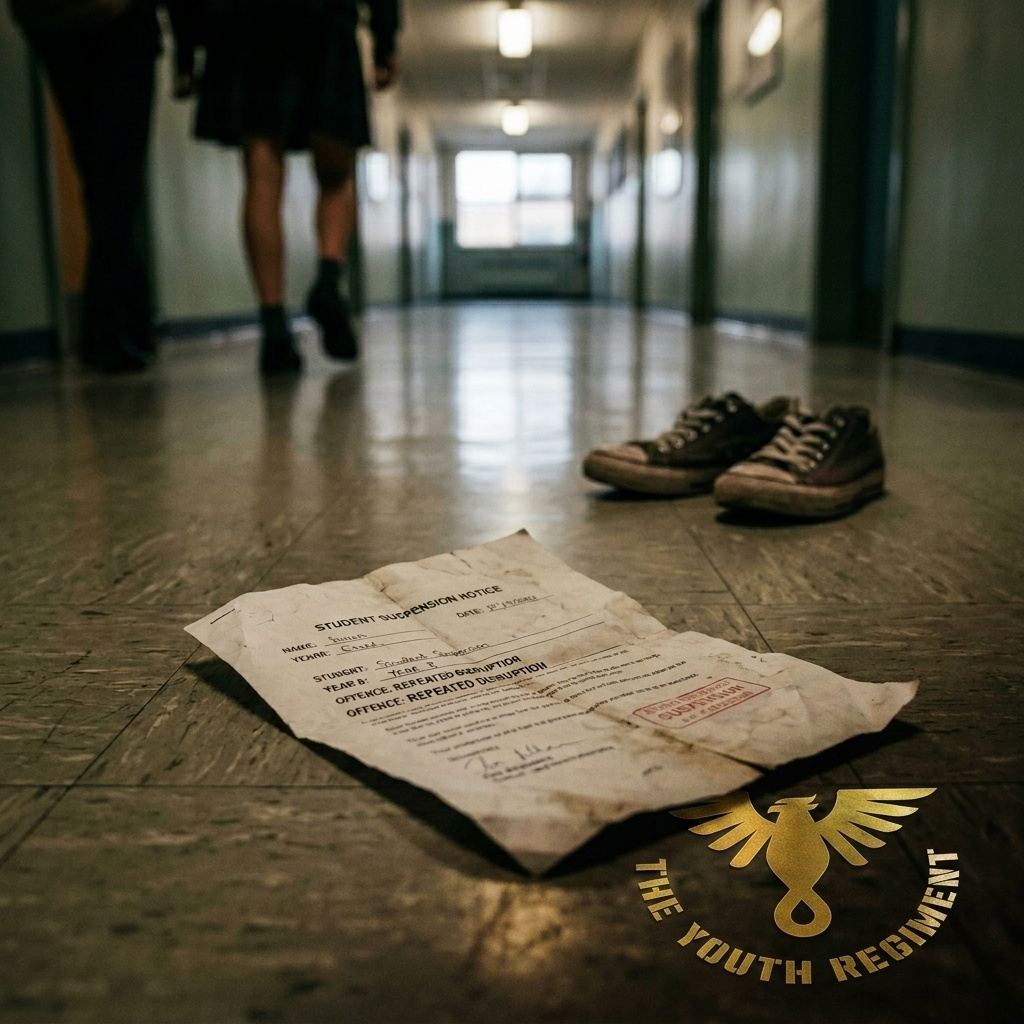
Here's what happens in the current system: A 13-year-old gets suspended for the first time. The school sends a letter home. The parents feel isolated and confused. The child falls further behind academically. Social withdrawal accelerates. Tech addiction deepens. Self-esteem crumbles.
Six months later, another suspension. Then another.
By the time families find programs like Veteran Mentors—the organisation I co-founded and built into Australia's leading youth development program—these kids have been suspended seven, eight, nine times. They've been seeing doctors, clinical psychologists, psychiatrists, and counsellors for years. They're on multiple medications. The parents are broken down, screaming for help, and the situation has only gotten worse.
We became the last resort when we should have been the first call.
The research validates what I've witnessed firsthand: early intervention is highly accessible, acceptable to young people, and results in outcomes that are positive and cost-effective. When you intervene early, individuals are more responsive to treatment.
Every dollar spent on early intervention saves years of pain, suffering, and taxpayer money.
What The Youth Regiment Brings to the Strategic Plan
The Youth Regiment isn't another program. It's a coordinated ecosystem designed to catch children early and provide sustained support across every system they touch.
Here's how it works:
1. School-Based Early Intervention
We enter schools and deliver modules on mental resilience and entrepreneurship—skills not taught in the current curriculum. We work with educators to identify at-risk children after their first suspension, not their seventh.
This addresses a critical gap in the Strategic Plan's education objectives. Schools need external expertise to support students facing complex challenges. We provide that expertise, backed by eight years of proven results.
2. Cross-Sector Collaboration
The Youth Regiment brings together what the Strategic Plan calls for but rarely achieves: genuine collaboration between education, allied health, youth justice, law enforcement, and policy makers.
We've partnered with Learning for Good to implement educational components and entrepreneurship training. We work with Pro Patria to employ veterans who've completed world-first treatment for anxiety, depression, and PTSD—giving them purpose while providing young people with mentors who understand adversity. We collaborate with Frontline Labs to ensure our veteran mentors have skills they can utilise beyond our program.
This isn't theoretical. It's operational.
3. Evidence-Based, Peer-Reviewed Approach
I'm working closely with Dr Xanthe Mallett, one of Australia's leading criminologists, to get The Youth Regiment peer-reviewed and certified. This means government agencies—state police, federal law enforcement, the justice system—can utilise our services with confidence.
The Strategic Plan emphasises evidence-based practice. We're building the evidence base in real time, tracking families pre, during, and post-program for up to six years through our resilience report system.
4. Whole Family Support
You can't fix the child without supporting the family. I learned this after spending 150+ contact hours with families and staying connected years post-program.
The Youth Regiment provides ongoing family support, parent workshops, and post-program mentorship. We don't just run a 10-day program and disappear. We build a national family.
This aligns directly with the Strategic Plan's recognition that families are the foundation of child wellbeing.
The Policy Imperative
I've had the privilege of working with Senator Jacqui Lambie on policy advocacy. Together, we pushed for the social media age restriction that's now being implemented across Australia. I gave testimony as an expert witness at the Youth Justice Reform Select Committee in Queensland.
The data I presented was clear: youth crime rates are declining, yet incarceration is increasing. The system prioritises punishment over prevention.
The Strategic Plan calls for better outcomes. The Youth Regiment delivers them by intervening before children enter the justice system.
Research shows that students who have been suspended are more likely to have contact with the criminal justice system due to lack of adult supervision, association with antisocial peers, and negative impacts on essential skills like reading.
We break that pipeline.
Why Now Is Critical
The Youth Regiment launched in May 2025 with $500,000 in investment. We've already delivered our first school seminar at Cranbrook School with 200 Year 11 students—the response was phenomenal.
We're positioned to scale rapidly across NSW, delivering early intervention at the exact moment the Strategic Plan needs it most.
But here's the reality: the window for transformative change is limited. The next 12 months are crucial.
The Prime Minister has promised $1 billion in mental health investment if re-elected. I've said publicly that 1% of that funding spent on The Youth Regiment would generate more success than the other 99% spent in areas that have proven time and again to fail on a massive scale.
That's not arrogance. That's eight years of documented results.
The Triple Impact Model
The Youth Regiment delivers impact across three critical areas:
Youth: Mental resilience, life skills, educational pathways, and prevention of justice system involvement.
Families: Support, education, and tools to guide their children through adolescence.
Veterans: Employment, purpose, and utilisation of their unique skillsets in service of the next generation.
This model aligns perfectly with the Strategic Plan's objectives around education, health, safety, and community participation.
What Success Looks Like
Success isn't measured in programs delivered. It's measured in lives changed.
It's the 13-year-old who was suspended once, entered our school-based intervention, learned mental resilience and emotional regulation, and never got suspended again.
It's the parent who felt isolated and lost, attended our workshop, and gained the tools to support their child effectively.
It's the veteran who struggled with PTSD, found purpose as a mentor, and now helps families avoid the pain he experienced.
The Strategic Plan envisions a NSW where all children and young people have the best possible start in life. The Youth Regiment makes that vision operational.
The Path Forward
I've spent eight years building Australia's greatest youth development program. I've worked with politicians, police commissioners, premiers, and CEOs of major organisations. I've been on national television, given keynote addresses, and won the Prime Minister's Veteran Employment Awards in two categories.
But none of that matters if we don't act now.
The Youth Regiment is ready to partner with the NSW Government to deliver on the Strategic Plan's objectives. We have the expertise, the partnerships, the evidence base, and the track record.
What we need is the commitment to prioritise prevention over punishment, early intervention over crisis response, and evidence-based practice over outdated approaches that have failed a generation of young people.
The first suspension is the intervention point.
The Youth Regiment is the intervention.
And the time to act is now.
Matthew French is the founder and CEO of The Youth Regiment, co-founder of Veteran Mentors, and a leading voice on youth development, early intervention, and tech addiction in Australia. He has worked with over 3,500 families across eight years and serves as an expert advisor on youth justice reform.