The Numbers Don't Lie: What Eight Years on the Frontline Taught Me About Australia's Mental Health Crisis
The Numbers Don't Lie: What Eight Years on the Frontline Taught Me About Australia's Mental Health Crisis
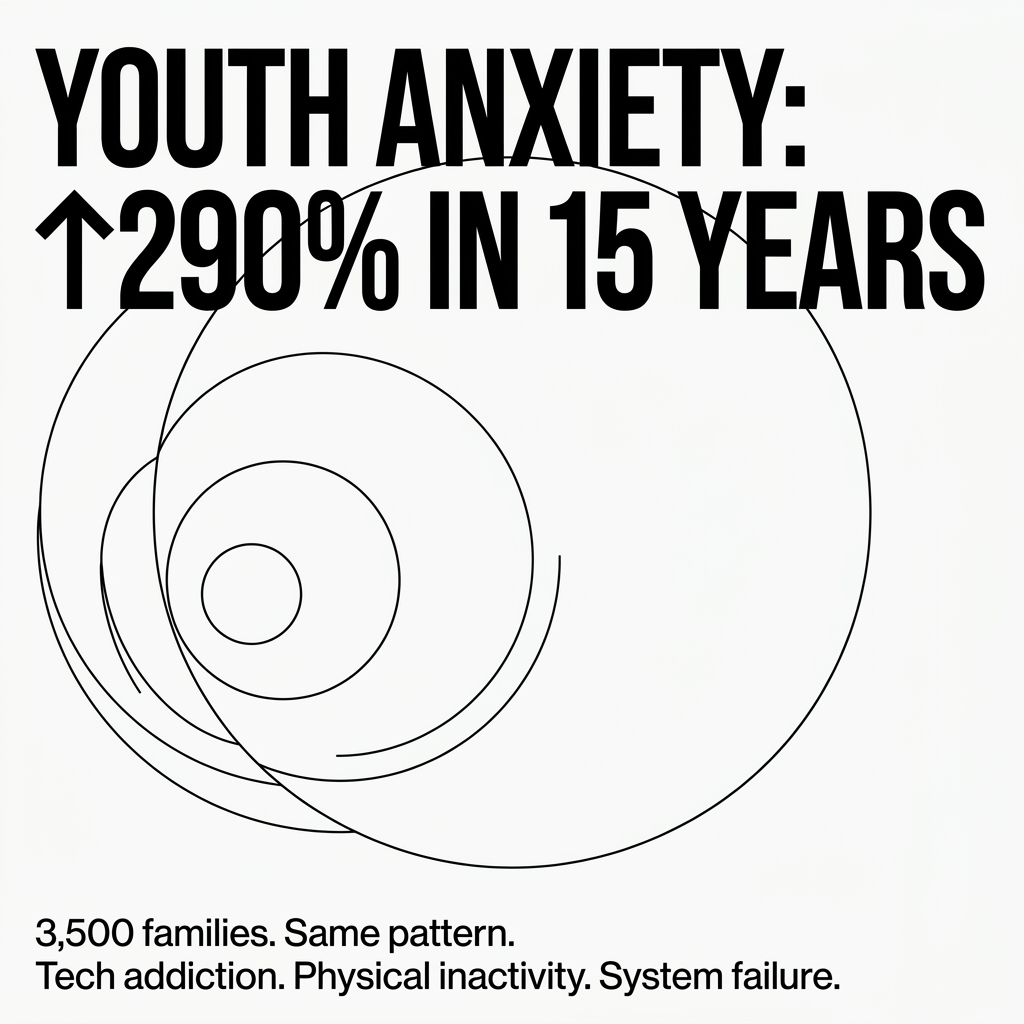
I've spent 3,500 hours sitting across from broken families. Parents who've tried everything. Kids who've been medicated, counselled, suspended, expelled.
The Australian Bureau of Statistics just released data comparing our national mental health between 2017-18 and 2020-22.
I don't need their graphs to tell me what's happening. I've lived it.
But when the numbers confirm what you've witnessed firsthand, you can't ignore it anymore.
The Statistics Tell a Story We Already Know
Between 2017-18 and 2020-22, something shifted in Australia's mental health landscape. The ABS data shows patterns that match exactly what I've been screaming about from the frontline.
The prevalence of mental health conditions increased. Not marginally. Significantly.
Anxiety disorders surged. Depression rates climbed. And the demographic most affected? Young Australians aged 16-24.
I watched this unfold in real time.
In 2017, when we started Veteran Mentors, families came to us desperate. By 2022, they arrived destroyed. The difference wasn't subtle. It was catastrophic.
What Changed Between These Two Data Points
COVID-19 sits between these two statistical snapshots like a fault line.
Lockdowns. Isolation. Economic uncertainty. School closures.
But here's what the statistics don't capture: the *compounding effect* of tech addiction during enforced isolation.
When you lock teenagers in their homes and hand them unlimited screen time, you don't just pause their development. You accelerate their decline.
I saw kids who were struggling in 2017-18 become completely non-functional by 2020-22. Not because they were weak. Because every support system collapsed simultaneously.
The Real Story Behind the Numbers
The ABS data shows increased mental health service utilisation. More GP visits. More psychologist appointments. More prescriptions.
Sounds positive, right? More people seeking help.
Wrong.
I've met the families behind those statistics. They've been seeing doctors for *years*. They've tried multiple medications. They've attended countless counselling sessions.
And they're still broken.
The increase in service utilisation doesn't reflect improved access to effective treatment. It reflects desperation cycling through an ineffective system.
The Pattern I've Witnessed 3,500 Times
Here's what typically happens:
Year One: Child shows behavioural issues. Parents seek help. GP prescribes medication.
Year Two: Behaviour worsens. Medication adjusted. School suspensions begin. Psychologist added.
Year Three: Multiple medications. Multiple suspensions. Psychiatrist involved. Social withdrawal accelerates.
Year Four: Expelled from school. Self-harm begins. Parents completely lost. Family unit fracturing.
Year Five: They find us. As a last resort.
The ABS statistics capture the *volume* of interventions. They don't capture the *failure rate*.
What the Data Reveals About Our Approach
The comparison between 2017-18 and 2020-22 exposes a fundamental flaw in how we conceptualise mental health treatment.
We've built a system designed for *management*, not *resolution*.
Look at the data on medication use. It increased. Look at the data on ongoing psychological treatment. It increased.
Now look at the data on mental health outcomes. They *worsened*.
This isn't a resource problem. It's a methodology problem.
The Missing Variable
The ABS surveys don't ask about tech addiction. They don't measure social media consumption. They don't track gaming hours.
But I do.
Every single family I've worked with over eight years shares this commonality: severe tech addiction paired with complete physical inactivity.
When Channel 7's Spotlight investigation identified me as the only expert in Australia effectively dealing with tech addiction at scale, it wasn't because I had formal qualifications in the field.
It was because I was the only one *actually addressing it*.
The mainstream mental health system treats anxiety and depression as primary conditions. I treat them as *symptoms* of lifestyle dysfunction.
Remove the tech addiction. Introduce physical training. Rebuild routine and structure. Create genuine connection.
The anxiety and depression improve. Not manage. *Improve*.
The Demographic Breakdown Confirms Everything
The ABS data shows the sharpest increases in mental health conditions among young people.
This isn't coincidental.
The generation most affected is the generation that grew up with smartphones. The generation that experienced critical developmental years through screens instead of real-world interaction.
I've worked with kids from every corner of Australia. Every socioeconomic background. Every family structure.
The common thread isn't poverty. It isn't broken homes. It isn't trauma.
It's *disconnection*.
Disconnection from physical activity. Disconnection from genuine relationships. Disconnection from purpose.
The Self-Esteem Collapse
The statistics show increased rates of depression. But they don't capture the *depth* of self-loathing I encounter.
These kids don't just feel sad. They feel *worthless*.
Social media creates a constant comparison machine. Gaming creates a dopamine dependency. The combination destroys self-worth.
When you spend years watching curated highlight reels of other people's lives whilst achieving nothing tangible yourself, you develop a profound sense of inadequacy.
The medication doesn't fix this. Talking therapy doesn't fix this.
Achievement fixes this. Real-world challenge fixes this. Physical capability fixes this.
What the Next Data Snapshot Will Reveal
The ABS will release their next major study in a few years. Based on what I'm seeing now, here's what it will show:
**Continued increases in youth mental health conditions.** The trajectory hasn't changed. We're still heading in the wrong direction.
**Higher medication rates.** Because that's our default response. Prescribe more. Prescribe earlier.
**Increased service utilisation with worsening outcomes.** More appointments. More interventions. Same results.
Unless we change course.
The Early Intervention Window Is Closing
The comparison between 2017-18 and 2020-22 shows something critical: the age of onset is dropping.
Mental health conditions that previously emerged in late adolescence now appear in early adolescence. Sometimes childhood.
This acceleration demands a fundamental shift in strategy.
We can't keep waiting until families are destroyed before intervening. We can't keep treating mental health decline as inevitable.
Early intervention isn't about earlier medication. It's about earlier *prevention*.
The Solution the Statistics Point Towards
The data comparison reveals what works and what doesn't.
What doesn't work: more of the same. More medication. More traditional counselling. More waiting for crisis.
What works: intervention before the decline accelerates. Education system integration. Family-centred approaches. Physical training. Tech addiction treatment. Structure and routine.
I've proven this at scale. Over 3,500 families. Eight years of documented results.
The Youth Regiment represents the next evolution. Not just treating the crisis. Preventing it.
The Four-Pillar Approach
Based on eight years of frontline experience and what the data actually tells us:
Education System Integration: Catch problems at first suspension, not fifth expulsion. Work with schools to identify struggling students early. Provide immediate support before academic failure compounds mental health decline.
Allied Health Collaboration: Partner with doctors who recognise that medication alone isn't working. Offer alternatives before committing families to years of pharmaceutical dependency. Create referral pathways for early-stage intervention.
Post-Programme Support: The ABS data shows mental health isn't a single intervention problem. It requires ongoing support. Build communities that extend beyond programme completion. Maintain connection. Provide continued guidance.
Family-Centred Treatment: The statistics show mental health doesn't exist in isolation. Treat the family unit, not just the individual. Educate parents. Rebuild family connection. Create sustainable change.
What Eight Years of Data Actually Proves
The ABS provides national statistics. I provide individual outcomes.
Their data shows trends. My data shows transformations.
But here's what matters: both datasets point towards the same conclusion.
Our current approach isn't working. The numbers prove it. The families prove it.
We need systemic change. We need early intervention. We need evidence-based alternatives to the medication-first model.
The statistics between 2017-18 and 2020-22 don't just show a mental health crisis. They show a *system failure*.
The Investment That Makes Sense
The government promises billions for mental health. The ABS data shows we're already spending heavily on interventions.
But spending more on ineffective approaches doesn't improve outcomes.
I've demonstrated what works. At scale. With documentation. With measurable results.
One percent of the government's mental health investment directed towards proven early intervention programmes would generate more success than the other 99% spent on approaches that have failed repeatedly.
That's not arrogance. That's mathematics.
The Next Statistical Snapshot Depends on Decisions Made Now
When the ABS releases their next comparison, it will reflect choices we make today.
Continue current approaches, and the numbers will worsen. More mental health conditions. More medication. More service utilisation. Worse outcomes.
Shift towards early intervention, and we change the trajectory. Fewer crises. Less medication dependency. Stronger families. Better outcomes.
The data doesn't lie. But data alone doesn't create change.
Action creates change.
I've spent eight years proving what works. The statistics confirm what I've witnessed. The families confirm what the statistics suggest.
Now we need systemic support to scale solutions that actually function.
The next ABS report is being written right now. By the interventions we choose. By the families we help. By the systems we reform.
I've seen what's possible when you catch problems early. When you address root causes instead of managing symptoms. When you treat families as complete units instead of isolated patients.
The statistics between 2017-18 and 2020-22 show we're heading towards disaster.
But statistics don't dictate the future. They inform it.
And I'm done watching numbers climb whilst families suffer.
The Statistics: Numbers That Tell the Story
Youth Mental Disorders: 38.8% of young people aged 16-24 experienced a mental disorder in 2020-22, compared to 26% in 2007 — a 49% increase
Anxiety Disorders Overall: 17.2% of Australians had anxiety disorders in 2020-22, compared to 13.8% in 2007 — a 25% increase
Female Mental Disorders: 24.6% of females experienced mental disorders in 2020-22, compared to 21.6% in 2007 — a 14% increase
Youth Anxiety (16-24 years): Young people were 290% more likely to experience anxiety disorders in 2020-22 compared to 2007
Youth Depression (16-24 years): Young people were 280% more likely to experience depression in 2020-22 compared to 2007
Health Professional Consultations: 17.4% of Australians consulted health professionals for mental health in 2020-22, compared to 11.9% in 2007 — a 46% increase
Psychologist Use: Use of psychologists increased by 123% between 2007 and 2020-22
GP Mental Health Visits: General practitioner consultations for mental health increased by 53% between 2007 and 2020-22
Treatment-Seeking: 46.6% of people with mental disorders sought help in 2020-22, compared to 37.5% in 2007 — a 24% increase
Overall 12-Month Mental Disorders: 21.5% of Australians experienced mental disorders in 2020-22, compared to 19.5% in 2007 — a 10% increase
Self-Harm Lifetime Prevalence: 8.7% of Australians aged 16-85 have self-harmed in their lifetime, with 1.7% in the past 12 months — 1.7 million Australians
Young Female Self-Harm: 27.9% of females aged 16-24 had self-harmed in their lifetime, compared to 13.6% of males
Self-Harm Hospitalisations (15-19 years): 389 per 100,000 population in 2021-22 — the highest rate of all age groups
Youth Self-Harm Hospitalisation Increase (females): 87% increase for 15-19 year old females in 2021-22
Self-Harm Hospitalisation Growth (under 14 females): More than 300% increase between 2008-09 and 2022-23
Youth Psychological Distress: 26% of people aged 16-24 experienced high or very high psychological distress in 2020-22
Young Women's Distress: 34% of young women aged 16-24 experienced high/very high psychological distress, compared to 18% of young men
Medicare Mental Health Services (Youth): 643,000 young people aged 12-24 received Medicare-subsidised mental health services in 2021-22 — 23% of all recipients
Suicide as Proportion of Youth Deaths (15-17): 30.9% of all deaths in 2022, up from 16.5% in 2001 — an 87% increase
Suicide as Proportion of Young Adult Deaths (18-24): 32.4% of all deaths in 2022, up from 23.9% in 2001 — a 36% increase
But Wait… The
But Wait… The "Good News" (If You Can Call It That)
Before you drown in despair, let me share some statistics the mainstream mental health system will celebrate as victories. Brace yourself for my sarcasm.
Substance Use Disorders Decreased: From 5.1% in 2007 to 3.3% in 2020-22 — a remarkable improvement! Of course, the experts conveniently forget to mention that those who DO have substance use disorders now experience greater severity than ever before. So fewer people, but they're suffering worse. Victory?
More People Seeking Help: Treatment access increased from 34.9% to 45.1% — a 29% increase! Marvellous! More people are seeking help because more people are bloody drowning. It's like celebrating that more lifeboats are being deployed whilst the ship is sinking at record speed.
Psychologist Consultations Up 123%: Fantastic! More psychologists are busier than ever. Their waiting lists are 6-12 months long. Parents are desperate. Children are deteriorating. But hey, at least the numbers look good on a government report, right?
GP Mental Health Visits Up 53%: Brilliant! GPs—who get 15 minutes per patient and minimal mental health training—are writing more scripts and referrals than ever. The pharmaceutical companies must be thrilled.
Here's the reality: These "improvements" aren't improvements at all. They're proof the system is overwhelmed. When help-seeking increases by 46% but mental disorders increase by even more, and when severity worsens despite more treatment, you're not winning—you're losing badly and lying about the score.
After 8 years on the frontline, working with over 3,500 families, I can tell you this: The current system isn't broken—it was never designed to work in the first place. Early intervention isn't just important; it's the ONLY thing that will stop this catastrophe. Everything else is just polishing the brass on the Titanic.