The Weapon We're Too Afraid to Use: Why Shared Vulnerability Heals Communities
The Weapon We're Too Afraid to Use: Why Shared Vulnerability Heals Communities
I've spent eight years working with over 3,500 families whose children have been expelled from schools, medicated into oblivion, and written off by every system designed to help them.
The parents arrive broken. The kids arrive angry.
And the thing that changes everything is the one thing most professionals refuse to do.
Show their own scars first.
The Science Behind What I've Seen on the Ground
When I tell parents about my broken neck, my PTSD, the medications that nearly destroyed me, something shifts in the room. The walls come down.
Research backs this up. Individuals who openly acknowledge their pain and seek support recover more effectively from setbacks, trauma, and grief than those who attempt to tough it out alone.
Dr Brené Brown's research shows that people who embrace vulnerability form deeper connections and report higher levels of empathy, authenticity, and joy. But here's what matters more than the research.
I see it work every single day.
Why Traditional Mental Health Fails These Families
The families who reach my programmes have spent years in the mainstream mental health system. Years of clinical psychologists, psychiatrists, and counsellors. Multiple medications. Countless appointments.
The situation got worse.
The problem is simple. When you sit across from a teenager who's been suspended seven times, who's cutting themselves, who's been failed by everyone, you can't hide behind professional distance.
They smell bullshit from a mile away.
My veteran mentors don't pretend to have all the answers. They share their own battles with depression, anxiety, and trauma. They show their vulnerability first.
And suddenly, these kids who wouldn't talk to anyone start opening up.
The Biology of Connection Through Vulnerability
When we share our struggles, our bodies respond. Vulnerable connection reduces levels of cortisol, the body's primary stress hormone, and boosts the production of oxytocin, the bonding hormone.
This isn't just feel-good psychology. Chronic emotional suppression is linked to poor sleep, higher stress reactivity, elevated blood pressure, poorer immune function, and an increased risk of anxiety and depression.
I've watched kids transform when they realise they're not alone. When they see grown men who've served in Afghanistan talk about their panic attacks, something fundamental changes.
The shame lifts.
The Parent Workshop That Changes Everything
On the second last day of our programme, we run a parent workshop. This is where the real work happens.
Parents stand up and share their failures. Their fears. The times they screamed at their kids. The nights they cried alone, convinced they were the worst parent in the world.
And every other parent in that room nods. Because they've been there too.
Research shows that individuals who share their painful experiences report a 35 per cent increase in feelings of connection.
But the number doesn't capture what I see. Parents who arrived feeling isolated and lost suddenly realise they're part of a community. They exchange numbers. They stay in touch for years.
They become each other's support system.
Why Schools Are the Perfect Place for Early Intervention
Half of all mental disorders start by 14 years and are usually preceded by non-specific psychosocial disturbances. This accounts for 45 per cent of the global burden of disease across the 0-25 age span.
The earlier we intervene, the more cost-effective and successful the outcome.
Schools are ideal sites for early mental health interventions because children and youth spend the majority of their time there. But here's what most schools miss.
The first suspension is the critical moment.
That's when you need to step in with real support, not corridor placement and passive problem management. That's when you need adults who are willing to be vulnerable, to share their own struggles, to show these kids that everyone faces challenges.
Supportive school culture fosters safe and positive child-adult relationships, in which children and youth can feel comfortable to share their mental health concerns with staff.
But you can't create that culture without vulnerability.
The Reconnection Expedition: Vulnerability in Action
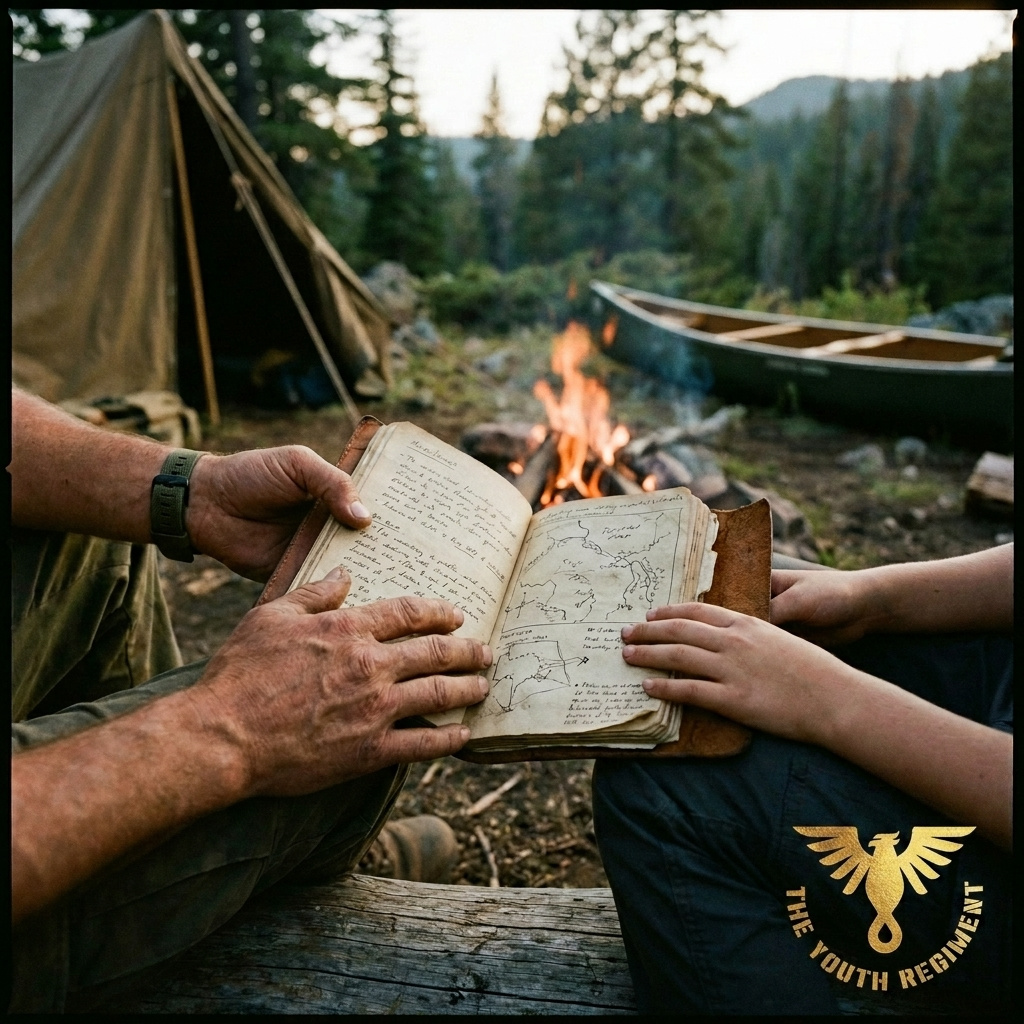
We created a three-day wilderness adventure where parents and children canoe together and camp in remote areas of New South Wales. The focus is on the parent opening up in front of their child.
Not the other way around.
Parents write letters to their kids. They talk about their own childhoods, their regrets, their hopes. They show vulnerability first.
And the kids respond. Because when you see your parent being real, being human, being vulnerable, it gives you permission to do the same.
Supportive parent-adolescent relationships comprising openness, acceptance, and emotional responsiveness work in tandem to influence adolescent emotion regulation and subsequent adjustment outcomes.
Translation: when parents are vulnerable, kids learn to regulate their emotions better, show more prosocial behaviours, and experience less aggression and depressive symptoms.
The Military Structure Paradox
People assume military structure and vulnerability are opposites. They're wrong.
My veteran mentors bring both. They create structure, discipline, and clear expectations. But they also share their battles with PTSD, their struggles with civilian life, their moments of weakness.
The structure creates safety. The vulnerability creates connection.
You need both.
When you train side by side, knowing that at any moment you could be dropped from the sky into unforgiving terrain, you learn to trust. You learn that vulnerability in the right context is strength.
That's what we bring to these families.
Why This Approach Threatens the System
For eight years, my methods were used as a last resort. Families came to us after everything else failed. After years of medication, therapy, and interventions that made things worse.
And we got results.
But here's the uncomfortable truth. If vulnerability and early intervention work this well, it exposes how badly the current system is failing.
Clinical distance protects professionals. It maintains hierarchy. It keeps the expert separate from the patient.
But it doesn't heal communities.
Modelling vulnerability in families and communities creates psychological safety, a culture where others feel free to express themselves without fear of judgement. In schools, workplaces, and therapy rooms, this culture improves outcomes across the board: better relationships, lower burnout, greater creativity, and enhanced wellbeing.
The Cost of Waiting
Young adults aged 18-23 have the lowest levels of resilience of all age cohorts surveyed, with four out of five displaying lower propensity for resilience than the average adult.
Low resilience is linked to worse performance at work and in the classroom, feelings of low self-worth and self-esteem, and poor physical and mental health.
We're creating a generation that doesn't know how to be vulnerable, doesn't know how to ask for help, doesn't know how to connect.
And then we wonder why youth mental health is in crisis.
The World Bank's downward spiral of childhood vulnerability shows that with each shock, the child goes down further, reaching a new level of vulnerability. With each level, they're exposed to a host of new risks.
The earlier the intervention, the more cost-effective it is.
But early intervention requires adults who are willing to be vulnerable first. Who are willing to show their scars, share their struggles, and create space for kids to do the same.
Building Connection Protects Mental Health
Building strong bonds and connecting to youth can protect their mental health. The feeling of connectedness is important and can protect adolescents from poor mental health, and other risks like drug use and violence.
In organisations that help young people forge connections through impactful and vulnerable conversations, 76 per cent of students reported feeling less alone after participating. Sixty-three per cent felt better connected to their school's peers and adults, and 69 per cent felt empowered to create change at their schools, community, and world.
This is what happens when you create a culture of vulnerability.
Kids realise they're not broken. They're not alone. They're part of something bigger.
What The Youth Regiment Does Differently
After eight years building Veteran Mentors into the leading youth programme in Australia, I launched The Youth Regiment to focus on early intervention and prevention.
We enter schools and provide support on things not taught: mental resilience, entrepreneurship, and how to handle the first suspension before it becomes the seventh.
We work with allied health to implement strategies before entering a lifetime of counselling and medication.
We work with policy makers to better inform them on the direction we need to take in youth justice, education, and mental health for teenagers.
And at the centre of everything we do is shared vulnerability.
My mentors share their stories. Parents share their struggles. Kids share their pain.
And healing happens.
The Challenge for Communities
If you want to heal your community, you need to start with vulnerability.
Not the polished, Instagram version. The real thing. The messy, uncomfortable, scary thing where you admit you don't have all the answers.
When home feels like a safe, supportive space, it gives teens the confidence to open up about their feelings and seek help when they need it. Families who prioritise open communication, show unconditional love, and stay involved create an environment that promotes healing and resilience.
But it starts with adults going first.
Teachers sharing their struggles. Parents admitting their mistakes. Mentors showing their scars.
That's how you create psychological safety. That's how you build trust. That's how you heal communities.
The Path Forward
I've worked with families from every corner of Australia. Different backgrounds, different challenges, different stories.
But they all have one thing in common.
They needed someone to be vulnerable first. To show them it was safe to open up. To prove that asking for help is strength, not weakness.
The science supports it. The results prove it. The families confirm it.
Shared vulnerability heals communities.
The question is whether we're brave enough to use it.